ONPAR Middle School Earth Science
This project researched and developed a suite of technology-enhanced classroom assessments for middle school students aligned with the Next Generation Science Standards (NGSS).
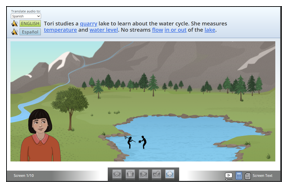
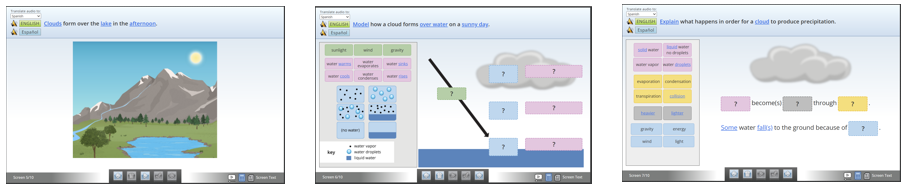
Sample Earth Science Item Series
Full assessment tasks consist of 2 to 4 item series related to an overall context.
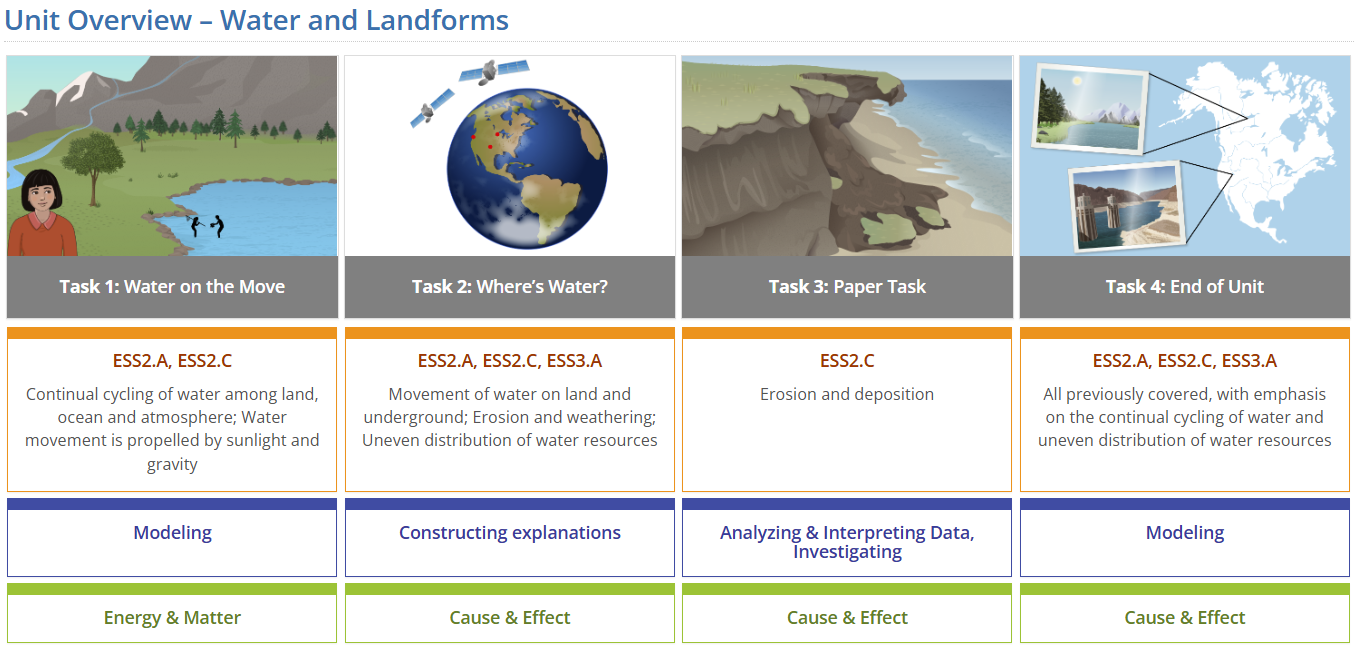
Unit Overviews
These overviews show the primary NGSS standards assessed in each ONPAR middle school earth science unit.
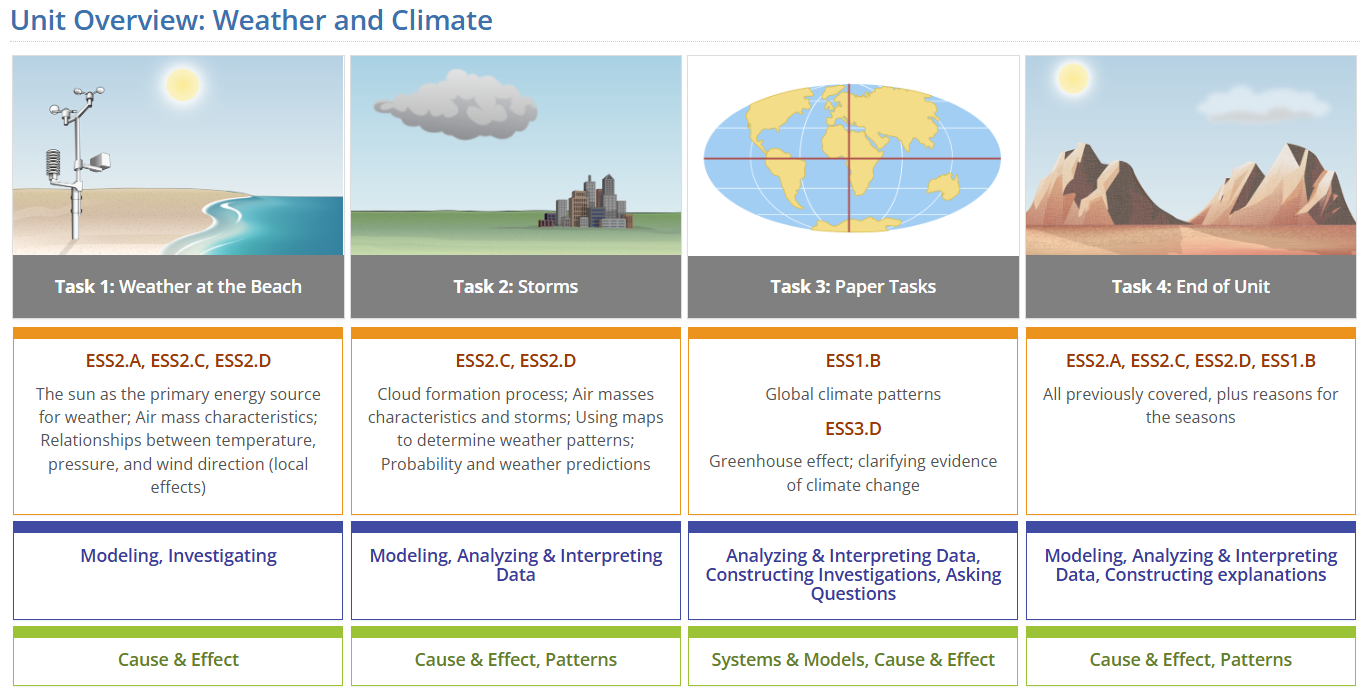
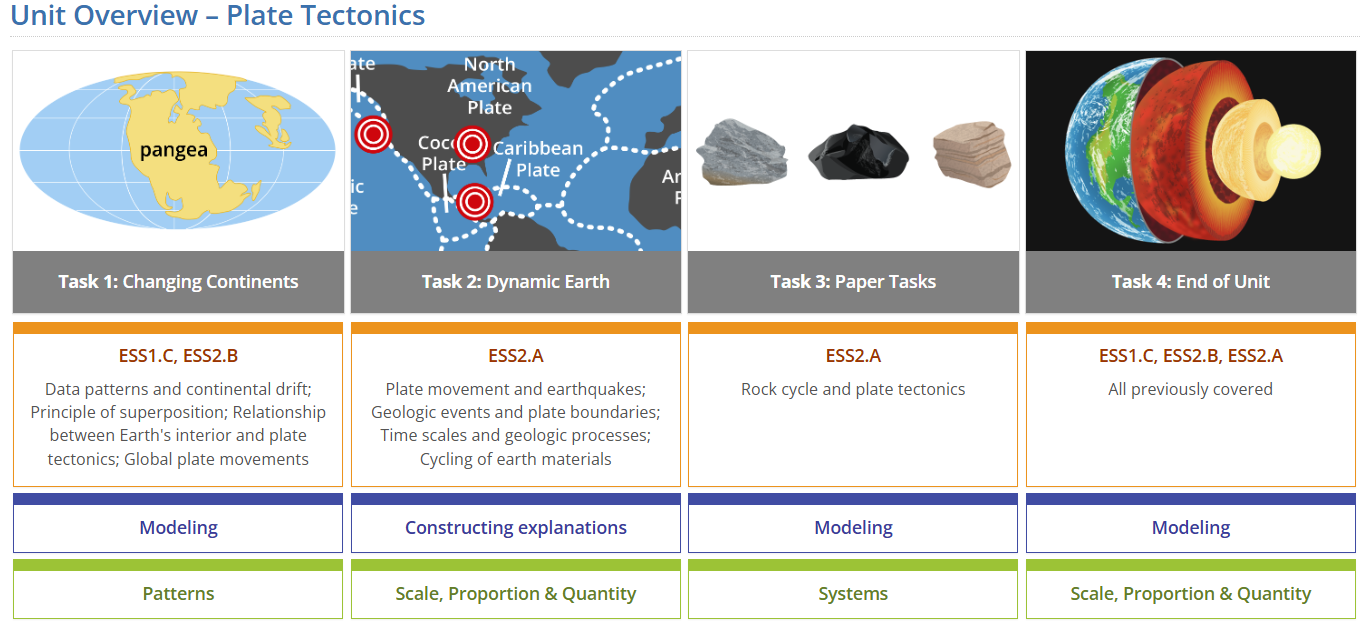
About the ONPAR Project
Materials for 12 middle school science units were developed and piloted with 71 teachers and approximately 8,000 students across the United States between 2016 and 2019.
Using an assessment approach based on our prior research, called ONPAR, this project developed innovative assessment tasks that used visuals, action, sound, and language to communicate with students in the assessment environment and generated automatic scoring and reporting, with diagnostic feedback, based on student responses across screens.
Wright, L., Harkins, H., Kopriva, R., Auty, W., Malkin, L., & Myers, B. (2022). Technology-enhanced tasks to assess three-dimensional science sense-making: Possibilities and lessons learned from the ONPAR NGSS-based classroom assessment project [Journal Article]. Contemporary Issues in Technology and Teacher Education, 22(2).
Other ONPAR Middle School Science projects
This project was carried out in collaboration with the Michigan Department of Education and funded by the US Department of Education Office of Elementary and Secondary Education (OESE) Enhanced Assessment Grant (EAG) Program (PR #S368A150019)